Management Fees and Repair Reserve Funds in Japanese Condos: What Is Reasonable?
Owning a condo in Japan means paying a management fee and a repair reserve every month. Using the government guideline, we explain what level of reserve is typical and what to check before you buy.
Two monthly costs, two different purposes
When you own a condominium in Japan, you pay two fixed monthly charges on top of any mortgage: the management fee (kanrihi) and the repair reserve fund (shuzen tsumitatekin). Both go to the owners' association, but they are used differently.
The management fee covers day-to-day operations: the management company's contract, cleaning and utilities for common areas, and regular inspections of elevators and fire equipment. In tower condominiums with a concierge, gym or lounge, the cost of those services is usually included here too.
The repair reserve fund is money set aside for future large-scale repairs, such as exterior walls, roof waterproofing, elevator replacement and plumbing. It pays only for repairs to common parts of the building, not for renovations inside your own unit[1].
If the management fee is too low, daily services suffer. If the repair reserve is too low, owners may face a lump-sum levy when major repairs are due, or the work may not happen at all. Before buying, the reserve usually deserves the closer look.
What is a reasonable repair reserve? The government guideline
The Ministry of Land, Infrastructure, Transport and Tourism's guideline on repair reserve funds (revised June 2024) gives monthly reference amounts per square meter of unit floor area, based on a large number of long-term repair plans[1]:
| Building size | Average (yen/m²/month) | Range covering about two-thirds of cases (yen/m²/month) |
|---|---|---|
| 20 or more floors above ground | 338 | 240–410 |
| Under 20 floors, total floor area under 5,000 m² | 335 | 235–430 |
| Under 20 floors, 5,000–10,000 m² | 252 | 170–320 |
| Under 20 floors, 10,000–20,000 m² | 271 | 200–330 |
| Under 20 floors, 20,000 m² or more | 255 | 190–325 |
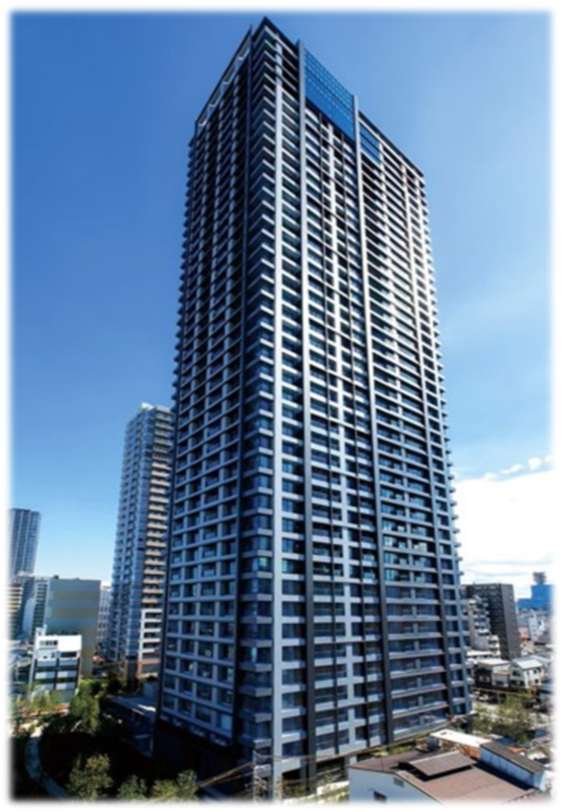
Towers of 20 or more floors are listed separately because exterior repairs need special scaffolding and common areas make up a larger share, so repair costs tend to be higher[1]. Buildings with mechanical parking also need an additional amount based on the number of spaces[1].
Careful: these are averages over the whole plan
The figures above are averages over the entire long-term repair plan (for example, 30 years). They are not what you should be paying each month today[1].
There are two common ways of collecting the reserve[1]:
- Equal contributions: a fixed amount from the start, with no large increases built in. The guideline considers this preferable for stable, long-term saving.
- Step-up contributions: a small amount at first, raised in planned steps later. The initial burden is light, but if owners fail to agree on the increases when the time comes, the fund can fall short.
The guideline gives an example. If a unit needs a total of 5.22 million yen in repairs over 30 years, equal contributions come to about 14,500 yen a month. Under a step-up plan, the buyer pays a 360,000 yen initial repair fund at purchase, then 6,000 yen a month in the first year, rising by 3,000 yen every five years to 21,000 yen a month in years 26–30[1].
So if a unit's current reserve is well below the reference range, it is not necessarily "cheap". It may simply mean increases are coming.
A worked example
Say you are looking at a 75 m² unit in a tower of 20 or more floors. Using the guideline average of 338 yen/m² per month, the plan-period average comes to about 25,350 yen a month[1].
- If the unit currently pays around 25,000 yen a month, it is close to the guideline average[1].
- If it currently pays 12,000 yen a month, check the long-term repair plan for when and by how much the reserve will rise, and build the higher amount into your budget[1].
This is only a rough comparison. The guideline itself stresses that equipment, scale and condition vary by building, so the building's own long-term repair plan is what counts[1].
Five things to check before you buy
- Whether there is a long-term repair plan and how often it is revised. The guideline calls for a review roughly every 5 years[1]. An outdated plan may understate what is needed.
- Which contribution method is used, and when and how much it will rise.
- The current reserve balance and any unpaid contributions. Buildings with many owners in arrears are more likely to run into trouble at the next major repair.
- The history of large-scale repairs and when the next one is due. Find out when the exterior, waterproofing and elevators were last renewed, and whether the fund will be enough for the next round.
- What the management fee covers. A higher fee is natural if the building has a concierge, gym and similar facilities. What matters is whether the service matches the cost.
This information normally appears in the management company's disclosure report (juyo jiko chosa hokokusho) and the long-term repair plan, which a broker should be able to provide before you sign.
Summary
Judge the management fee by the services it buys, and the repair reserve by the plan behind it. Compare the reserve against the government guideline first, then check the long-term repair plan for future increases to see the true cost of ownership. If you would like to understand how a particular building is managed, contact us and we can help obtain and explain the documents.
Sources
- 国土交通省, マンションの修繕積立金に関するガイドライン(令和6年6月改定), Jun 2024 (accessed Oct 25, 2026)
This article is general information, not investment, tax or legal advice. Figures are as of the publication of the sources listed and may have changed since. Please consult a professional for decisions about your situation.