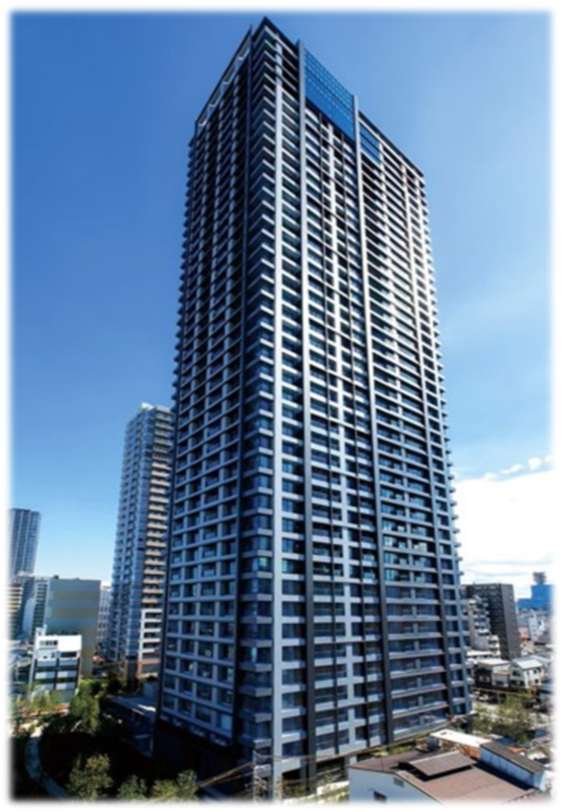
Reading the Important Matters Explanation (Juyo Jiko Setsumeisho): What to Check Before Signing for a Resale Condo in Japan
Before you sign to buy property in Japan, the broker must have a licensed Real Estate Transaction Specialist hand you and explain the Important Matters Explanation. The document often runs to a dozen pages or more. Following Article 35 of the Real Estate Brokerage Act and its Enforcement Regulations, we pick out what a resale condo buyer should read most carefully: rights and legal restrictions, management fees and the repair reserve, disaster risk, and money and cancellation terms.
The short answer: the Important Matters Explanation is your last chance to check everything before you sign
When you buy property in Japan, the broker must, before the sale contract is signed, have a licensed Real Estate Transaction Specialist (takuchi tatemono torihikishi) hand you the Important Matters Explanation (juyo jiko setsumeisho) and explain it to you. The specialist must show their license card during the explanation, and their name must appear on the document [1]. With your consent, the document can be provided electronically instead of on paper [1]. It often runs to a dozen pages or more, and many buyers come away remembering only that they signed it. Yet it is the last point before the contract at which rights, restrictions, costs and risks are all laid on the table. Your signature means you understood what was explained, so ask about anything unclear on the spot, and if you are not satisfied you can take it home and decide later [6]. Below, following Article 35 of the Real Estate Brokerage Act and its Enforcement Regulations, we pick out the parts a resale condo buyer should read most carefully.
What the law requires to be explained: understand the structure first
Article 35(1) of the Real Estate Brokerage Act lists the matters that must be explained in a sale. They fall roughly into these groups [1]:
- The property and its rights: the type and content of rights registered on the building, and the registered holder;
- Legal restrictions: an outline of restrictions under the City Planning Act, the Building Standards Act and other laws; any burden relating to private roads; and the state of water, electricity, gas and drainage facilities;
- Matters specific to condominiums (sectional ownership buildings): rights to the land under the building, and rules on its management and use;
- Existing buildings: whether a building condition survey has been carried out and a summary of its results, and whether design documents and inspection records have been kept;
- Money and contract terms: the amount and purpose of money changing hands other than the price; contract cancellation; liquidated damages or penalties; protection measures for deposits; protection measures for payments and money held on deposit; the details of any mortgage arranged through the broker and what happens if the loan is not approved; and any insurance or similar measures to secure liability for non-conformity;
- Other matters: items set by ministerial ordinance as necessary to protect the buyer.
These are the main chapters of the document. Layouts differ from broker to broker, but the items generally appear in this order. The explanation takes place before the contract is concluded, and if possible you should ask for a copy in advance and list your questions; that is far less stressful than seeing it for the first time on the day [6].
Part 1: Rights, legal restrictions and infrastructure
Registered rights. This section shows ownership, mortgages and other rights recorded in the land registry [1]. With resale property, the seller's mortgage is often still registered, so check that the explanation or the contract states it will be discharged before handover. The address, floor area and structure should be checked against the certificate of registered matters [6].
Legal restrictions. Building coverage ratio, floor area ratio and zoning appear here [6]. For a condo buyer this may seem remote, but it determines what can be built around you in future and how large the building could be if it is ever rebuilt.
Roads and utilities. Check the road access: the width of the road, the length of frontage and whether the road is private. If the road is narrower than 4 m, a setback may be required [6]. If water, electricity, gas or drainage are not yet in place, the document must state the expected timing and any special costs the buyer will bear [1].
Part 2: Condominium management and costs — the pages to read most carefully
For condo buyers this is the most important part. Article 16-2 of the Enforcement Regulations sets out what must be explained in the sale of a sectional ownership building [2]:
- the type and content of rights to the land under the building;
- rules in the bylaws on common areas;
- rules restricting the use of private units (for example pets, short-term rentals, or renovation limits);
- rules allowing only certain owners to use part of the building or land (exclusive use rights, such as balconies, private gardens or parking spaces);
- rules reducing or waiving costs for certain owners only;
- rules on the repair reserve fund and the amount already accumulated;
- the regular management fee the owner must pay;
- the name and address of any management contractor, and whether management is entrusted to a licensed condominium management company;
- records of maintenance and repairs carried out.
A few practical points. On use restrictions, read the bylaws and the detailed usage rules: a building that allows pets may not allow large dogs, and renovation may be restricted [6]. For the repair reserve, look not only at the monthly amount but at the total already accumulated for the whole building, and compare it with the maintenance records and the history of major repairs [2][6]. Always ask about arrears as well. Under the Act on Building Unit Ownership, the management association's claims against an owner based on the bylaws or general meeting resolutions can also be enforced against the person who acquires that unit. In other words, the buyer may have to pay management fees and repair reserve contributions the previous owner left unpaid [3]. Confirm whether there are any arrears, and that the seller will settle them before handover [6].
Errors in this section can have serious consequences. Sumitomo Mitsui Trust Realty has described a Tokyo District Court ruling of September 29, 2021. The seller's side knew there were no bylaws, no repair reserve and no management company, yet explained that bylaws existed, that about 2.69 million yen had been accumulated and that management was fully outsourced. The court found the buyer had been misled into a mistake and held the sale contract void (the case was decided under the old Civil Code) [5]. These items are not formalities, and a buyer is fully entitled to insist that the figures are explained accurately.
Part 3: Building condition and disaster risk
Building condition survey. For an existing building, the document states whether a building condition survey has been carried out and summarizes the results. The survey counts only if it was done within a set period: one year in general, or two years for reinforced concrete or steel-reinforced concrete apartment buildings [1][2]. If none was done, the document says so, and you can decide whether to commission one yourself.
Seismic diagnosis and asbestos. For buildings other than those whose construction began on or after June 1, 1981, any seismic diagnosis that has been carried out must be explained, as must any recorded survey of asbestos use [2]. Buyers of condos from the old seismic-standard era should pay particular attention here.
Disaster-related zones. The document must state whether the property lies within a landslide prevention zone for developed land, a sediment disaster warning zone or a tsunami disaster warning zone, and where it is located on the flood hazard maps the municipality provides under the Flood Control Act [2]. The flood hazard map explanation became mandatory on August 28, 2020, and the approximate location must be shown on the maps for river flooding, inland flooding and storm surge. The Ministry of Land, Infrastructure, Transport and Tourism also warns that being outside an assumed inundation area does not mean there is no flood risk [4].
Part 4: Money, cancellation and loan terms
Money other than the price. Check the amounts and timing of the deposit, the pro-rated settlement of property tax and similar charges, and the settlement of management fees and the repair reserve [1][6].
Cancellation rules. Check the deadline and conditions for cancelling by forfeiting the deposit, and the penalty for cancellation due to breach; the penalty is typically around 10% to 20% of the price [6].
Mortgage contingency. The document must describe any loan arranged through the broker and what happens if the loan is not approved [1]. Make sure the lender, loan amount, interest rate and repayment term are stated specifically; vague terms may leave you forced to accept a loan different from the one you wanted [6].
Keep a record. Oral explanations easily lead to disputes over who said what, so record the session with consent, or take notes on the points that concern you [6].
Summary
The Important Matters Explanation is the document that Article 35 of the Real Estate Brokerage Act requires a licensed specialist to hand over and explain before the contract [1]. For a resale condo, read most carefully the bylaws and use restrictions, the accumulated repair reserve and the management fee, and whether there are arrears [2][3], as well as the disaster-related zones and the location on the flood hazard maps [4]; go through the money, cancellation and mortgage contingency terms one by one too [6]. If the explanation is wrong, it can affect the validity of the contract itself [5]. If you are considering buying a home in Osaka, please contact us. We will try to give you a copy of the document in advance and explain each page, in Chinese if you prefer.
Sources
- e-Gov法令検索(デジタル庁), 宅地建物取引業法(昭和27年法律第176号)第35条(重要事項の説明等), Nov 8, 2026 (accessed Nov 8, 2026)
- e-Gov法令検索(デジタル庁), 宅地建物取引業法施行規則(昭和32年建設省令第12号)第16条の2・第16条の2の2・第16条の4の3, Nov 8, 2026 (accessed Nov 8, 2026)
- e-Gov法令検索(デジタル庁), 建物の区分所有等に関する法律(昭和37年法律第69号)第7条・第8条, Nov 8, 2026 (accessed Nov 8, 2026)
- 国土交通省, 不動産取引時において、水害ハザードマップにおける対象物件の所在地の事前説明を義務づけ(宅地建物取引業法施行規則の一部を改正する命令等の公布), Jul 17, 2020 (accessed Nov 8, 2026)
- 三井住友トラスト不動産, 修繕積立金等に関する説明義務(不動産売買のトラブルアドバイス 2025年4月号), Apr 2025 (accessed Nov 8, 2026)
- 東急リバブル, 重要事項説明書とは?契約前に知っておくべき内容・チェックポイントを解説(L-note), Mar 31, 2026 (accessed Nov 8, 2026)
This article is general information, not investment, tax or legal advice. Figures are as of the publication of the sources listed and may have changed since. Please consult a professional for decisions about your situation.