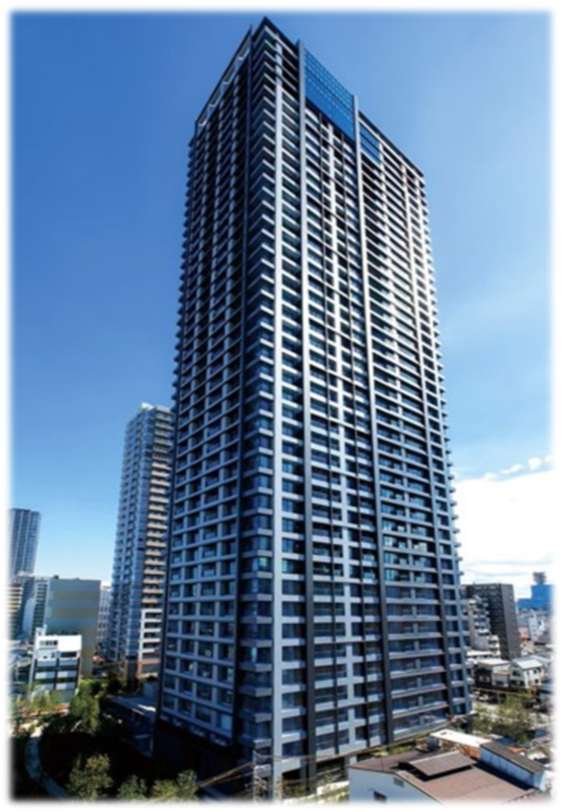
Contract Nonconformity Liability in Japan: Who Is Responsible When You Find Defects After Buying a Resale Home, and How Long You Have
Since April 2020, Japan's Civil Code has replaced 'defect warranty liability' with 'contract nonconformity liability'. If a resale home turns out not to match the contract, you can ask for repair, a price reduction, damages or cancellation, but the time limits differ sharply depending on whether the seller is an individual or a licensed dealer. Based on the statutes and government materials, we explain the rules and what to check before signing.
The short answer: it depends on the contract, who the seller is, and how quickly you give notice
You buy a resale home in Japan, move in, and then find a leak, a blocked pipe or a broken appliance. Can you hold the seller responsible? In Japan, the answer comes from the Civil Code's rules on "contract nonconformity liability" (keiyaku futekigo sekinin). According to the Ministry of Justice, the Civil Code amendment passed in 2017 took effect on April 1, 2020, and it reorganized the rules on the seller's liability when the property delivered does not match the contract in kind, quality or quantity [4].
In short, the law gives buyers several remedies, but the time limits and scope can be changed by agreement in the contract. Whether the seller is an individual or a licensed real estate dealer makes a big difference. Below we cover the buyer's rights, how the time limits work, how the rules differ by seller, and what to check before signing.
What "nonconformity" means, and how it differs from the old "defect warranty"
Article 562 of the Civil Code provides that when the property delivered does not conform to the contract in kind, quality or quantity, the buyer may demand that the seller cure it by repairing it, delivering a substitute or making up a shortfall [1]. The test is not "does the home have a flaw?" but "does it match what the contract promised?"
This matters. A resale home naturally shows wear and aging. If the contract and its attached disclosure documents already say, for example, "the bathroom fan is noisy" or "there was a past leak, now repaired," the buyer has accepted that condition by signing, and it is generally hard to claim nonconformity on that basis later. On the other hand, if the contract says the equipment works and it does not, that may well be a nonconformity.
The Ministry of Justice pamphlet explains that under the old Civil Code it was undisputed that the buyer could claim damages or cancel the contract, but it was disputed whether the buyer could demand full performance such as repair, and price reductions were allowed only in limited cases [4]. Under the amended code, depending on which party is at fault, the buyer may claim damages or cancel, and may also demand repair or a price reduction [4].
The buyer's four remedies
Based on the statute and the Ministry of Justice summary, the buyer has four remedies:
- Demand a cure: ask for repair, a substitute or delivery of any shortfall [1]. If it does not impose an unreasonable burden on the buyer, the seller may cure in a way different from the one the buyer requested [1].
- Demand a price reduction: if the buyer sets a reasonable period and demands a cure, and the seller does not cure within it, the buyer may demand a reduction in proportion to the nonconformity. Where a cure is impossible or the seller clearly refuses, among other cases, the buyer may demand the reduction immediately without a prior demand [1].
- Claim damages: Article 564 states that the cure and reduction rules do not prevent a damages claim under Article 415 [1]. The Ministry of Justice table shows that damages can be claimed only when the seller is at fault [4].
- Cancel the contract: also under Article 564, the buyer may cancel under Articles 541 and 542 [1]. After the amendment, the buyer may cancel even when neither party is at fault [4].
There is one precondition. If the nonconformity is due to a cause attributable to the buyer, the buyer can demand neither a cure nor a price reduction [1]. The Ministry of Justice table also shows that none of the four remedies is available when the buyer is at fault [4].
Time limits: notify within 1 year of finding out, but the contract can change this
Article 566 provides that when the property delivered does not conform to the contract in kind or quality, the buyer loses the right to claim a cure, a reduction, damages or cancellation unless the buyer notifies the seller within 1 year of learning of the nonconformity [1]. The Ministry of Justice specifically highlights this one-year notice requirement [4]. Note that what is required is notice, not filing a lawsuit within 1 year. The one-year limit also does not apply if the seller knew of the nonconformity at delivery, or failed to know because of gross negligence [1].
Even after notice, the right itself is subject to the general statute of limitations. Article 166 provides that a claim is extinguished if not exercised within 5 years from when the creditor learned it could be exercised, or within 10 years from when it became exercisable [1]. A lawyer's presentation to a Ministry of Land, Infrastructure, Transport and Tourism (MLIT) study group likewise summarizes the period for nonconformity liability as 5 years from learning of it or 10 years from when it can be exercised [5].
However, these are the Civil Code defaults. A sales contract can provide otherwise, and in resale home transactions the most common special terms are those that shorten the period or exclude liability.
Individual seller vs. licensed dealer: a big difference
When the seller is an individual: the Civil Code lets the parties exclude or limit liability by agreement. The MLIT study group material summarizes resale home sales by individual sellers as "often 2 to 3 months from delivery" [5]. Some contracts exclude the seller's liability entirely. Even so, Article 572 provides that even with an agreement excluding warranty liability, the seller cannot escape liability for facts the seller knew of but did not disclose [1]. That is why the disclosure documents the seller fills out honestly are so important to the buyer.
When the seller is a licensed dealer: for example, a home a real estate company bought, renovated and resold. Article 40 of the Real Estate Brokerage Act provides that when a licensed dealer is itself the seller, it may not agree to terms on liability for nonconformity in kind or quality that are less favorable to the buyer than Article 566 of the Civil Code, except a term setting the notice period at 2 years or more from delivery [2]. Terms that violate this are void [2]. The MLIT study group material also summarizes resale homes sold by businesses as "2 years or more from delivery" [5].
Newly built homes: under Article 95 of the Housing Quality Assurance Act, the seller of a newly built home is liable for 10 years from delivery for defects in the "principal structural parts, etc." [3]. Contrary terms unfavorable to the buyer are void [3]. The MLIT study group material describes the covered items as "principal structural parts" and "parts that prevent rainwater intrusion" [5].
A supplement: resale home defect insurance
Because individual sellers' liability periods are often short, Japan offers "existing home sale defect insurance" (kizon jutaku baibai kashi hoken) to fill the gap. According to MLIT's list of insurance products, in the type for sales between individuals an inspection company or a broker acts as guarantor, the insurance period is 1, 2 or 5 years, and coverage centers on structural and waterproofing parts, with riders that can add equipment [6]. For the type where a licensed dealer is the seller, the period is 2 or 5 years [6].
The MLIT study group material lists items outside coverage, such as land subsidence and asbestos [5]. Whether a property qualifies, and what procedures and costs apply, depend on the home and the insurer, so confirm with your broker before signing.
What it means for buyers: four things to check before signing
- The nonconformity liability clause in the contract: how many months after delivery does it run, or is liability excluded entirely? Which parts of the home does it cover?
- The seller's disclosure documents and equipment list: are known leaks, termites or plumbing problems listed? What is written there generally becomes a premise of the contract.
- Who the seller is: for the same kind of resale home, a dealer seller is bound by Article 40 of the Real Estate Brokerage Act and the liability period is longer.
- Give written notice as soon as you find a problem: keep photos and dates, contact the seller promptly through your broker, and do not let the contractual period run out.
Buyers living overseas are not always in the home, so post-handover checks tend to be delayed. At handover, it is best to arrange for someone to check the equipment, doors, windows and plumbing on the spot, and to give notice the same day if anything is wrong.
Summary
Contract nonconformity liability gives buyers four remedies when a home does not match the contract: cure, price reduction, damages and cancellation. What actually decides whether you can use them is the period set in the contract, whether the seller is an individual or a dealer, and whether you gave notice in time. Understanding this clause before signing is far more effective than arguing about it afterwards. Mitsuishi-inter can help you review contract terms and disclosure documents. Please feel free to reach us through our contact form.
Sources
- e-Gov法令検索(デジタル庁), 民法(明治二十九年法律第八十九号)第166条・第562条・第563条・第564条・第566条・第572条, Nov 9, 2026 (accessed Nov 9, 2026)
- e-Gov法令検索(デジタル庁), 宅地建物取引業法(昭和二十七年法律第百七十六号)第40条, Nov 9, 2026 (accessed Nov 9, 2026)
- e-Gov法令検索(デジタル庁), 住宅の品質確保の促進等に関する法律(平成十一年法律第八十一号)第95条, Nov 9, 2026 (accessed Nov 9, 2026)
- 法務省, 2020年4月1日から 売買、消費貸借、定型約款などの契約に関する民法のルールが変わります(パンフレット), Feb 1, 2019 (accessed Nov 9, 2026)
- 国土交通省, 既存住宅流通に向けて ー消費者保護の観点からー(既存住宅市場の整備・活性化懇談会 第3回 資料5), Feb 28, 2025 (accessed Nov 9, 2026)
- 国土交通省, 住宅瑕疵担保履行法 保険商品, Nov 9, 2026 (accessed Nov 9, 2026)
This article is general information, not investment, tax or legal advice. Figures are as of the publication of the sources listed and may have changed since. Please consult a professional for decisions about your situation.