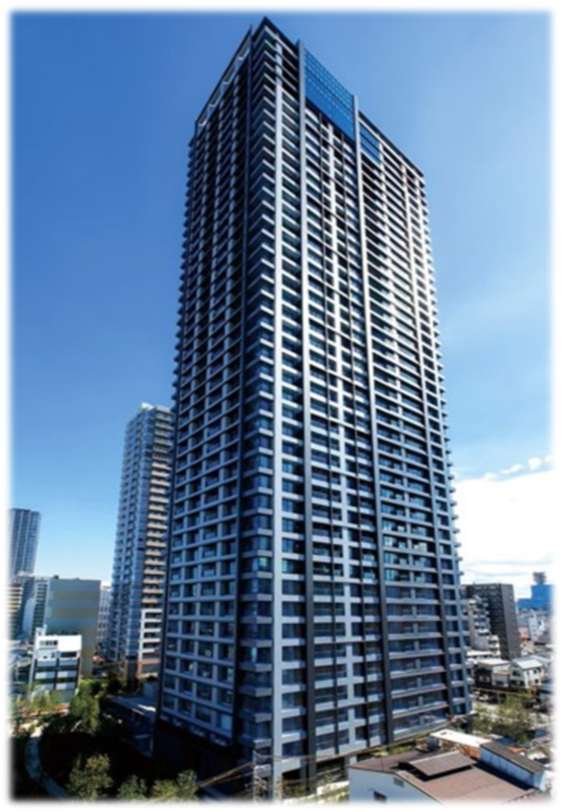
Tokyo Kantei: A New Condo at Osaka Station Now Implies a ¥24.77 Million Household Income; Where Kansai's Affordability Line Sits as Rates Rise
Tokyo Kantei's October 29 report on 2025 affordability in the Kansai region: the household income implied by a new 70 m² condo averages ¥9.93 million and reaches ¥24.77 million at JR Osaka Station, with about three in ten stations above ¥10 million. We also walk through its simulations for take-home incomes of ¥8, ¥6.5 and ¥5 million at 1.20% and 2.00% rates.
In one sentence: central Osaka new-builds now imply a ¥20 million-plus income, but the picture changes a stop or two out
On October 29, 2026, the private research firm Tokyo Kantei published its feature report "Kantei eye 128". It estimates the household income implied by buying a new condominium or a new detached house in the Kansai region in 2025, and adds a simulation of where households with take-home incomes of ¥8 million, ¥6.5 million and ¥5 million can still buy in "a world with interest rates" [1]. The headline: the "reference household income" for a new condo in Kansai averages ¥9.93 million, the highest figure is ¥24.77 million at JR Osaka Station on the Osaka Loop Line, and roughly three in ten stations now require ¥10 million or more [2]. At the same time, the report shows that a household taking home ¥5 million a year still has real options in Kansai, as long as it does not insist on a new-build in central Osaka [4].
How the "reference household income" is calculated
The figure divides the price of new condos around each station (converted to 70 m²) by the median income multiple of actual buyers in the Japan Housing Finance Agency's Flat 35 user survey, applying the multiple for the prefecture where the property sits [2]. For detached houses the same method uses a 100 m² price [3]. In other words, it is not a bank's approval threshold. It answers the question: judged by the debt load recent buyers actually took on, what income does a new home at this station correspond to?
New condos in Kansai: three in ten stations need ¥10 million, central Osaka enters the ¥20 million band
The Kansai average for 2025 is ¥9.93 million, up from ¥9.50 million in 2024 and far above the ¥7.42 million of 2021 [2]. Counting stations by bracket gives the following picture [2]:
- Stations in the "¥6 million or more" bracket hold the largest share at 31.3%. The "¥10 million or more" bracket follows closely at 30.8%; a year earlier it was the largest [2].
- "¥8 million or more" accounts for 27.5%, while "under ¥6 million" has shrunk to 3.8%. Before the pandemic that bracket held more than 100 stations; today only 7 remain [2].
- The two top brackets, "¥20 million or more" and "¥15 million or more", each stand at 3.3%, together still short of 10%. In 2024 they were 1.5% and 2.5% respectively [2].
The number of "¥20 million or more" stations rose from 3 to 6, and all but one in central Kyoto are in central Osaka [2]. In order: JR Osaka at ¥24.77 million, Shinsaibashi on the Midosuji subway line at ¥24.63 million, Osakajo-Kitazume on the JR Tozai Line at ¥23.98 million, Kitahama on the Sakaisuji Line at ¥23.00 million, Kyoto Shiyakusho-mae on the Kyoto subway at ¥22.65 million, and Nakazakicho on the Tanimachi Line at ¥20.85 million [2]. Further down are Umeda at ¥16.92 million, Momodani at ¥16.62 million, Tennoji at ¥12.16 million and Nakatsu at ¥11.86 million [2].
The change in the northern suburbs and along commuter lines deserves attention. Senrioka on the JR Kyoto Line climbed from ¥5.22 million in 2015 to ¥12.40 million in 2025; Ibaraki stands at ¥12.61 million, Takatsuki at ¥11.36 million and Hirakatashi on the Keihan Line at ¥10.99 million, all now in the ¥10 million-plus range [2]. For comparison, in 2021 the "under ¥6 million" bracket still held 27.8% of stations [2].
New detached houses: a clearly lower bar
The detached-house distribution in the same report looks completely different. In 2025 the largest bracket is still "¥4 million or more" at 55.5%. The "¥8 million or more" bracket grew from 14 to 21 stations, lifting its share from 3.3% to 5.9%, but those stations are limited to Kyoto City plus parts of the Hanshin corridor and the northern Osaka suburbs. Only 1 station sits in the "¥10 million or more" bracket, and none reaches "¥15 million or more" [3].
Tokyo Kantei notes that in areas with good commuting access, detached houses mostly fall in the ¥6 million to ¥8 million range while new condos in the same areas frequently exceed ¥10 million, so in Kansai a new detached house is the lower hurdle. The combined share of "¥8 million or more" stations is under 10%, against roughly 40% in the Tokyo metropolitan area [3]. Among Osaka Prefecture stations near the top of the detached-house ranking are Shoji on the Osaka Monorail at ¥9.02 million, Esaka on the Midosuji Line at ¥8.06 million, Nishitanabe at ¥8.01 million, Toyonaka on the Hankyu Takarazuka Line at ¥7.86 million and JR Suita at ¥7.36 million [3].
The affordability line after rate rises: even ¥8 million take-home does not reach a Midosuji Line new-build
The third report changes the angle and draws the "where can you buy" line from the take-home income of an ordinary working household. The assumptions: a 20% down payment with the rest borrowed, equal monthly payments, a 35-year term, the current average floating rate of 1.20%, and a repayment ratio of 25%; stations whose monthly payment falls within ±¥10,000 of the ceiling are treated as the "border area" [4]. The monthly ceilings for the three income levels are ¥166,000 for ¥8 million take-home (about ¥10 million gross), ¥135,000 for ¥6.5 million (about ¥8 million gross) and ¥104,000 for ¥5 million (about ¥6 million gross) [4].
The results [4]:
- Even with ¥8 million take-home, new condos along the Midosuji Line in Osaka City, around Shijo in Kyoto and around Sannomiya in Kobe are out of reach; what this income does buy is a new condo at popular stations in the northern suburbs and the Hanshin corridor [4].
- Take Suita on the JR Kyoto Line: the 70 m² new-condo price is ¥69.28 million and the monthly payment under the stated conditions is ¥161,661, below the ceiling. If the rate rises to 2.00%, the payment climbs to ¥183,585 and crosses the line [4].
- At Koshienguchi and Tarumi on the JR Kobe Line and Rokko on the Hankyu Kobe Line, the payment already exceeds the ceiling at 1.20%, but stretching the term to 40 years brings them back into the "affordable" range [4].
- In the ¥6.5 million bracket, Osaka examples include Hankyu Takatsuki-shi, where a new condo at ¥59.19 million means ¥138,121 a month (over the ceiling) while a new detached house at ¥48.28 million means ¥112,655 (within it), and Kintetsu-Yao, where a new condo at ¥54.63 million costs ¥127,473 a month and a new detached house at ¥35.95 million costs ¥83,893 [4].
- In the ¥5 million bracket, Konoikeshinden on the JR Katamachi Line (new condo ¥42.49 million, ¥99,149 a month) and Hirano on the Tanimachi Line (¥45.92 million, ¥107,142 a month) sit near the border, and the list of stations grows once ten-year-old resale condos and new detached houses are included [4].
The report also observes that with the same ¥6.5 million take-home, a new condo is affordable at the Hanshin Main Line express stops Koshien and Uozaki, whereas along the Hankyu Kobe Line the options are largely ten-year-old resale condos or new detached houses at local-train-only stations. The popularity gap between the three parallel lines, Hankyu, JR and Hanshin, shows up directly in the affordability threshold [4].
What this means for buyers
First, central Osaka new-builds are already a separate price band. The reference income at Osaka Station, Shinsaibashi and Kitahama is ¥23 million or more, while stations in outer Osaka City, the northern suburbs and the Hanshin corridor mostly fall between ¥10 million and ¥13 million [2]. On a limited budget, moving one or two stops outward, or switching from a new-build to a resale unit around ten years old, lowers the hurdle by a full step.
Second, the interest rate is the variable that moves the line. The Suita example shows that a rise from 1.20% to 2.00% adds more than ¥20,000 to the monthly payment on the same unit, enough to push a station from "affordable" to "difficult" [4]. Do not budget on today's rate alone; leave room for increases. A longer term lowers the monthly payment but raises total interest, and it has to be weighed against your age and repayments after retirement.
Third, detached houses and resale units are a cushion specific to Kansai. Unlike the Tokyo area, fewer than one in ten Kansai stations require an income of ¥8 million or more for a new detached house [3]. For households that value floor area and total price, detached houses and resale condos in the northern suburbs, eastern Osaka and the Hanshin corridor belong on the comparison list.
Summary
Tokyo Kantei's set of reports lays out the income threshold for each Kansai station and the monthly payment under different rates. The core message is that central Osaka new-builds now imply an income in the twenty-million-yen band, yet an ordinary working household still has realistic options by moving slightly outward, changing property type and building in a margin for higher rates. Mitsuishi-inter can run the numbers for specific stations, comparing new, resale and detached options against your income, down payment and commute. Tell us your situation through the contact form.
Sources
- 株式会社東京カンテイ, Kantei eye 128「新築マンション&一戸建て住宅が購入可能な目安世帯年収 2025」ほか, Oct 29, 2026 (accessed Nov 13, 2026)
- 株式会社東京カンテイ, プレスリリース「新築マンションが購入可能な目安世帯年収(近畿圏)」, Oct 29, 2026 (accessed Nov 13, 2026)
- 株式会社東京カンテイ, プレスリリース「新築一戸建て住宅が購入可能な目安世帯年収(近畿圏)」, Oct 29, 2026 (accessed Nov 13, 2026)
- 株式会社東京カンテイ, プレスリリース「住宅購入可能なボーダーエリアの検証(近畿圏)」, Oct 29, 2026 (accessed Nov 13, 2026)
This article is general information, not investment, tax or legal advice. Figures are as of the publication of the sources listed and may have changed since. Please consult a professional for decisions about your situation.