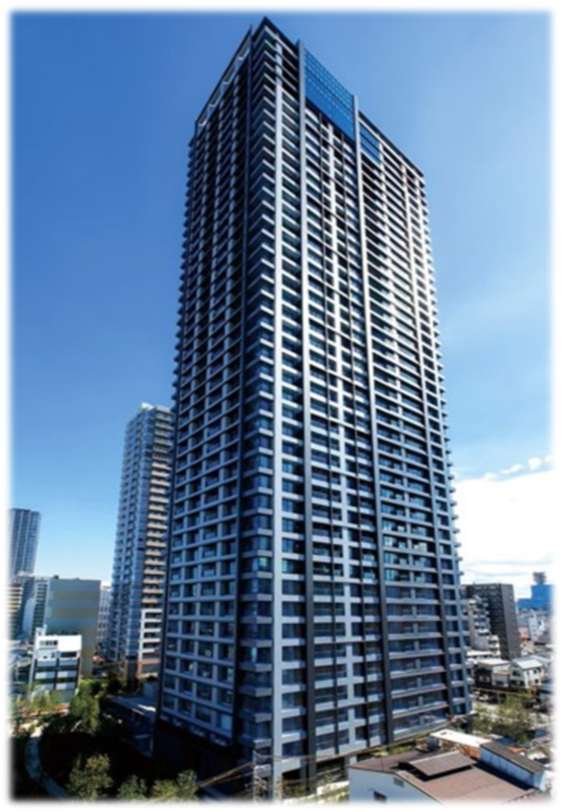
How to Read a Japanese Property Flyer (Maisoku): Price, Walking Time, Floor Area and Transaction Type
Japanese agents hand out a one-page flyer called a maisoku. How is walking time calculated, why does the registered floor area differ, and what do 'seller' and 'broker' mean? We walk through a real listing.
What is a maisoku?
When you look for property in Japan, the document agents hand you most often is a one-page A4 or A3 flyer, known in the trade as a maisoku. It is packed with the price, transport access, floor area, management fees and more, with the agent's name and license number at the bottom.
The layout is not up to each agent. Property advertising in Japan must follow the Fair Competition Code for Real Estate Representations and its enforcement rules, which set out what must be shown and by what standard[1]. Once you know these rules, you can read information the flyer does not spell out.
Below we go through each section using our own listing, City Tower Umeda Higashi, 18th floor, as the example[3].
Price and access: how walking time is calculated
The price field reads "15,300万円", which is 153 million yen[3]. Prices in Japan are usually quoted in units of 10,000 yen (man-en), so watch the number of digits when converting.
The access field lists Nakazakicho Station on the Osaka Metro Tanimachi Line as a 5-minute walk[3]. That 5 minutes is not measured by actually walking the route. Under the code it is calculated as 1 minute per 80 meters of road distance, with any fraction rounded up to a full minute[1].
In practice:
- Waiting at traffic lights, slopes, pedestrian bridges and walking inside the station are not counted, so the real walk usually takes longer than stated.
- In large developments with several buildings, the distance to the station can differ noticeably by building, so check the actual distance from the building you are considering.
Floor area: why the registered area is smaller
In advertising, a condominium's floor area is in principle shown as the "wall-center" area, measured to the center line of the walls[1]. In the land registry, however, the floor area of a condominium unit is recorded using the inner line of the walls, known as the "inner" area[2].
So the registered area of the same unit is somewhat smaller than the advertised area. The code requires advertising for new condominiums to state that the figure is the wall-center area and that the registered area is smaller[1]. Some programs with floor-area requirements, such as mortgage tax relief, may use the registered area, so check it before you sign.
Our example is listed as "[wall-center] 76.95 m² (approx. 23.27 tsubo)"[3]. The tsubo is a traditional Japanese unit of about 3.31 m², often used to compare prices per unit area[3].
The "approx. 6.6 jo" on the floor plan describes room size in tatami mats. Under the code, when area is shown in tatami, each mat must represent at least 1.62 m² (based on wall-center area)[1].
Building: structure, floors and the meaning of "new"
The building section lists the structure (for example, reinforced concrete), the number of floors above ground, the unit's floor, its orientation and the month of completion[3].
In Japanese advertising, "new" (shinchiku) has a strict definition: less than 1 year since construction was completed, and never lived in[1]. A property completed more than a year ago, or one that anyone has lived in, must be described as pre-owned, however new it looks.
The completion date also affects things like the applicable earthquake standards and loan terms, so it is worth checking carefully.
Management: fees and how the building is managed
The management section usually shows the management company, the type of management (for example, fully outsourced), how the building manager works (resident, daytime or visiting), and the monthly management fee and repair reserve[3].
The manager's working pattern is one of the items the code requires to be shown[1]. To judge whether the repair reserve is reasonable, see our article on management fees and repair reserve funds.
Transaction type: "seller" versus "broker"
The transaction type field at the bottom must use terms such as seller, lessor, agent (proxy) or broker[1]. It tells you the company's role in the deal:
- Seller (urinushi): the company itself is selling. When you buy directly from the seller, there is generally no brokerage commission.
- Agent (dairi): the company sells on the seller's behalf under the seller's instructions.
- Broker (baikai / chukai): the company brings buyer and seller together, and a brokerage commission is usually payable when the deal closes.
Our example is marked "seller", meaning we sell it directly[3].
The remarks field often notes that where the drawing differs from the actual condition, the actual condition prevails. This reminds you that the floor plan is only a guide and that the site visit and contract documents are what count.
Summary
Every field on a maisoku follows common rules: walking time is calculated at 80 meters per minute, advertised floor area is the wall-center area, "new" has strict conditions, and the transaction type determines whether a commission applies[1]. Knowing these rules makes it harder to be misled by surface numbers when comparing listings. If you have questions about any property flyer, feel free to contact us.
Sources
- 不動産公正取引協議会連合会, 不動産の表示に関する公正競争規約・同施行規則(規約集), Aug 26, 2025 (accessed Oct 25, 2026)
- e-Gov法令検索(デジタル庁), 不動産登記規則(平成17年法務省令第18号)第115条, Feb 18, 2005 (accessed Oct 25, 2026)
- 三石国際不動産, シティタワー梅田東 18階 物件ページ, Oct 25, 2026 (accessed Oct 25, 2026)
This article is general information, not investment, tax or legal advice. Figures are as of the publication of the sources listed and may have changed since. Please consult a professional for decisions about your situation.