Osaka's Kita Ward: Living in Umeda, Nakazakicho and Tenma, and What It Costs
Kita Ward has about 150,000 residents on 10.34 km² and is both Osaka's biggest transport hub and a residential district. In the 2026 land price survey its commercial land rose 15.6% and residential land 7.3%; the household income implied by a new condo is ¥24.77 million at Osaka Station and ¥20.85 million at Nakazakicho. A neighborhood-by-neighborhood guide for buyers.
The short answer: Kita Ward is a hub and a residential district, with very different price levels inside one ward
Most people associate Osaka's Kita Ward with the towers and department stores of Umeda. Yet it is also home to about 150,000 people. As of October 1, 2026, Kita Ward's estimated population was 150,180 in 96,519 households, on an area of 10.34 square kilometers, for a density of about 14,524 people per square kilometer [3]. On November 1, 2025, the figures were 149,382 people and 95,672 households, so both population and households have edged up [3]. Dividing one by the other gives roughly 1.6 people per household, which points to a large share of single and two-person households. That is one reason condos in Kita Ward lean toward smaller layouts.
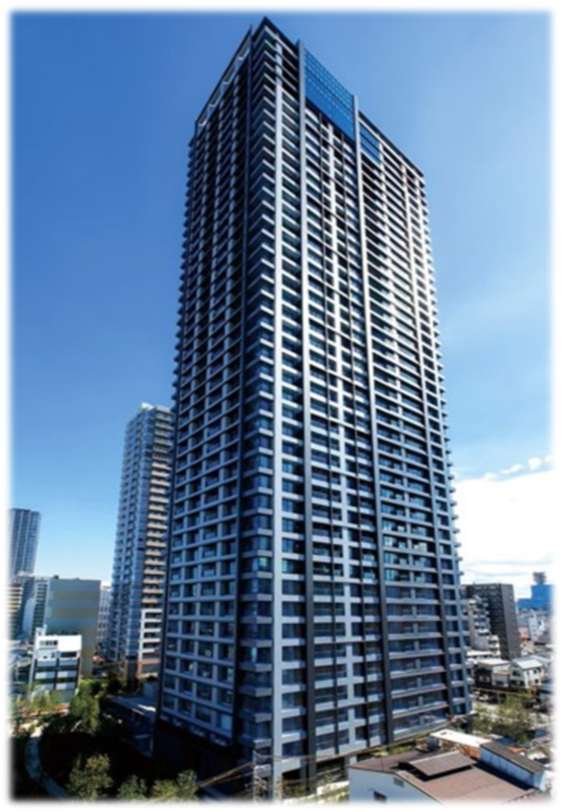
Price tiers in the ward are clear-cut. The area in front of Umeda's stations is some of the most expensive commercial land in Osaka, while Tenma, Nakazakicho and Nagara in the north are more everyday residential neighborhoods. Below we go area by area, then look at the data and what buyers should watch for.
Where Kita Ward is and how it came to be
Kita Ward sits at Osaka's front door. It is bounded by the Yodo River to the north, the Okawa River to the east and the Tosabori River to the south, and borders Fukushima Ward to the west [1]. Today's ward was created on February 13, 1989, when the old Kita Ward and the old Oyodo Ward merged [2]. Oyodo had originally been part of Higashiyodogawa Ward and became a separate ward in a 1943 reorganization [2]. As a result, the Oyodo and Nakatsu areas in the northwest feel quite different, in history and character, from Tenma and Nakanoshima in the southeast.
Living environment by area
Umeda (around Osaka Station): The area around JR Osaka Station is a major terminal where Hankyu, Hanshin, the subway and city buses converge, and a business district lined with skyscrapers. Department stores, hotels and restaurants cluster here, and together with one of the largest underground shopping networks in western Japan they form a vast commercial zone [1]. North of the station, Umekita (Grand Green Osaka) is still under construction: the roughly 8,400-square-meter Umekita Forest in Umekita Park is scheduled to open on November 20, 2026, the whole park around spring 2027, and the entire district in March 2028 [7]. Living in Umeda means unbeatable convenience for commuting and shopping; the trade-off is the highest prices and surroundings dominated by commercial facilities. Everyday needs such as grocery shopping and schools have to be checked block by block for each building.
Nakazakicho: Nakazakicho Station is on the Tanimachi subway line, the next stop from Tenjimbashisuji 6-chome [6]. It is close to Umeda, and its prices are pulled along by Umeda. Tokyo Kantei estimates that the household income implied by a new condo (normalized to 70 square meters) near Nakazakicho reached ¥20.85 million in 2025, placing it among the top six stations in the Kansai region [5].
Tenma and Tenjimbashisuji: The Tenjimbashisuji shopping street, running north and south from Osaka Tenmangu Shrine, is a long-established and lively arcade. The banks of the Okawa are a famous cherry blossom spot, and for one week in mid-April each year the Japan Mint opens its cherry blossom walkway to the public [1]. The shrine grounds also host Tenma Tenjin Hanjotei, a dedicated rakugo theater that was the first of its kind in Kansai in 60 years after the war [1]. With the arcade and shrines close at hand, this is the most lived-in part of the ward.
Nakanoshima: Home to the Osaka City Central Public Hall, a national Important Cultural Property; the city hall and the buildings of banks and trading companies form a single landscape with Nakanoshima Park [1]. The area is mainly offices, with limited housing supply.
The north (Nakatsu and Nagara): According to the ward office, riverside redevelopment in the Nakatsu district and around Nagara-higashi brought large high-rise housing, and the area has drawn attention as a place to live close to work [1].
Land prices and price levels: reading the data
In Osaka Prefecture's 2026 land price survey, Kita Ward's commercial land rose 15.6% on average (14.2% the year before) and residential land 7.3% (7.4% the year before). Osaka City averages for the same year were 12.3% for commercial and 6.7% for residential [4]. Looking at individual sites [4]:
- The residential benchmark site "Kita (Pref.) -1" in Nagara-naka 1-chome is valued at ¥632,000 per square meter, up 8.0%, ranking fifth by price among residential sites in the prefecture [4].
- Among commercial sites, Oyodo-minami 1-chome is ¥2,350,000 per square meter, up 21.8%, the largest rise of any commercial site in the prefecture; Nakanoshima 5-chome is ¥3,530,000, up 19.7% [4].
- Commercial land in Tenma 2-chome is ¥1,650,000, up 18.7%, and in Nishitenma 4-chome ¥3,670,000, up 16.5% [4].
- Ofukacho in front of Umeda (Grand Front Osaka South) is ¥24,900,000 per square meter, up just 1.6%: the price level is very high, but growth has clearly slowed [4].
For new condos, Tokyo Kantei's station-by-station 2025 figures for implied household income are a useful guide: JR Osaka ¥24.77 million (the highest in Kansai), Nakazakicho ¥20.85 million, Umeda on the Midosuji Line ¥16.92 million, Oebashi on the Keihan Nakanoshima Line ¥13.14 million, Osakatemmangu on the JR Tozai Line ¥13.03 million, and Nakatsu on the Midosuji Line ¥11.86 million [5]. Even within Kita Ward, neighboring stations can differ by a factor of about two.
What it means for buyers
First, decide which Kita Ward you want. Umeda is about transport and urban convenience; Tenma and Nagara are about daily life. On the same budget, looking from Umeda and Nakazakicho toward Tenma, Nakatsu and Nagara widens your choice of floor area and building age considerably.
Second, places that rose fastest can also swing more. Commercial land around Oyodo-minami, Nakanoshima and Tenma rose by close to a fifth or more, while central Umeda rose only 1.6% [4]. Rising land prices reflect demand, but they also mean the purchase price already bakes in a good deal of expectation. Base your decision on a loan amount you can comfortably carry and your intended holding period rather than on chasing growth rates.
Third, layouts are small, so be clear about use. With about 1.6 people per household in Kita Ward [3], one- and two-bedroom units dominate the market. If you will live there, check storage, management quality and noise. If you may rent it out later, check the building rules on leasing and short-term rentals, and how rent compares with management fees and repair reserves.
Fourth, think about Umekita on a timeline. Full completion of Umekita is planned for March 2028 [7], so foot traffic and retail around it will keep changing. Buildings near construction sites face noise and traffic effects during works, and post-completion views and pedestrian flows should be checked against the plans.
Summary
Kita Ward holds Osaka's most expensive commercial land as well as lived-in neighborhoods such as Tenma and Nagara. When searching here, settle on the type of area and your budget ceiling first, then compare price gaps between stations within the ward. Mitsuishi-inter's office is in Kita Ward, and we can compare listings and price levels in Umeda, Nakazakicho, Tenma and beyond against your commute, budget and intended use. Tell us what you are looking for through our contact form.
Sources
- 大阪市北区役所, 区の概要, Aug 25, 2008 (accessed Nov 13, 2026)
- 大阪市北区役所, 区の沿革, Aug 25, 2008 (accessed Nov 13, 2026)
- 大阪市, 推計人口(毎月1日現在)・人口異動(区別推計人口CSV 令和7年11月~令和8年10月), Oct 19, 2026 (accessed Nov 13, 2026)
- 大阪府, 令和8年大阪府基準地価格調査(地価調査)報道資料(PDF), Sep 15, 2026 (accessed Nov 13, 2026)
- 株式会社東京カンテイ, プレスリリース「新築マンションが購入可能な目安世帯年収(近畿圏)」, Oct 29, 2026 (accessed Nov 13, 2026)
- Osaka Metro, 天神橋筋六丁目(谷町線 T18)駅情報, Nov 13, 2026 (accessed Nov 13, 2026)
- 一般社団法人うめきたMMO(PR TIMES), 2026年11月20日(金)「うめきたの森」開園・「ひらめきの道」全面開通, Oct 27, 2026 (accessed Nov 13, 2026)
This article is general information, not investment, tax or legal advice. Figures are as of the publication of the sources listed and may have changed since. Please consult a professional for decisions about your situation.